Thaddeus Rowan
Fire & BloodThaddeus Rowan, Lord of Goldengrove, is presented as both a proven wartime leader and a steady political figure during the Regency of Aegon III. His career links the fighting of the Dance of the Dragons to the fragile work of governing afterward: he commands in the Reach, is considered as a royal consort, and ultimately serves as Hand of the King. The contrast between his respected public character and the marriage planned for him without Baela Targaryen’s consent also exposes the limits of the regents’ authority over the royal family.
Wartime Record in the Reach
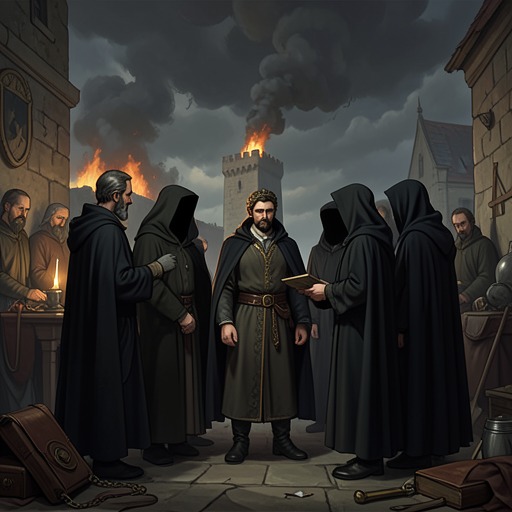
During the Dance, Rowan fought for Queen Rhaenyra and earned a reputation for courage and competence. His military standing was borne out in the Reach, where Lord Ormund Hightower’s force faced attacks from several directions. Rowan advanced from the northeast with a large host of mounted knights alongside Tom Flowers, while Ser Alan Beesbury, Alan Tarly, and Lord Owen Costayne threatened Hightower’s retreat. The combined forces closed around Ormund on the banks of the Honeywine, leaving his lines close to collapse.
The arrival of Daeron Targaryen on Tessarion reversed the battle. The Hightower forces rallied; Rowan withdrew north with what remained of his host. The defeat cost his side Tom Flowers, who died in the fighting, while Alan Beesbury and Alan Tarly were captured and Costayne was mortally wounded by Bold Jon Roxton. The episode places Rowan among the senior commanders of the queen’s cause, while showing that his ability and valor did not make him immune to the decisive intervention of a dragon and rider.
A Proposed Marriage to Baela Targaryen
After the war, the regents considered Baela Targaryen’s marriage a matter of state. Her husband would stand close to the throne, so the choice carried political risk as well as dynastic importance. Rowan was selected after other possibilities were discarded. His second wife had died the previous year, and he was seeking a young wife. He had fathered two sons by his first wife and five by his second, but no daughters; his four youngest sons still lived at home. The regents regarded these circumstances as useful: Baela would be mistress of his castle, and a son by her could provide Aegon III with a clear successor.
The council also judged Rowan’s temperament and record suitable for a royal consort. He was described as hearty, cheerful, well liked, and well respected, with a reputation as a devoted husband and father. His pride was not thought to become arrogance, and his sense of justice was not considered vindictive. He had served Rhaenyra ably, was dutiful in religious matters without being excessively pious, and was not known for overweening ambition. In the regents’ assessment, he could support Baela if she inherited the throne without trying to dominate her or displace her authority.
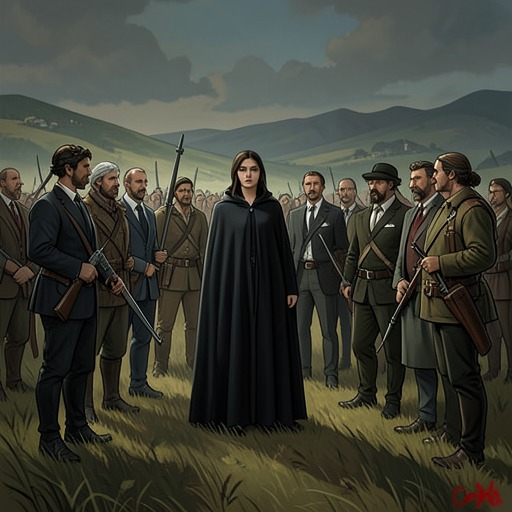
Baela rejected the match. She objected to the large age difference and Rowan’s appearance, and made a provocative claim about having previously been intimate with two of his sons; the account leaves the truth of that claim uncertain. The Hand sent her to her rooms under guard while the regents reconsidered. She escaped by climbing out a window, changing clothes with a washerwoman, and leaving through the castle’s front gate. She then crossed Blackwater Bay by hiring a fisherman and sought help from Alyn Velaryon on Driftmark. Within a fortnight, she and Alyn were married on Dragonstone.
The Marriage Dispute and Its Settlement
Baela’s flight left the regents facing a choice between challenging her marriage and accepting it. Some wanted the Hand to seek an annulment from the High Septon. Instead, he presented the union as a match arranged by the king and court, judging that Baela’s defiance posed a greater political problem than her choice of husband. He also considered Alyn, despite doubts about his lineage, likely to be loyal. Rowan’s wounded pride was addressed through a betrothal to Floris Baratheon, one of Borros Baratheon’s daughters. Floris was widely regarded as the prettiest of the Four Storms, but died in childbirth two years later.
The regents read Baela’s escape and marriage as evidence that she could not be trusted as Aegon’s heir, and turned instead to her sister Rhaena Targaryen. Rowan’s proposed match thus had consequences beyond his own prospects: it was part of the council’s attempt to manage succession through royal marriages. The contrast is sharp. The regents chose Rowan partly because they believed he would not seek power at his wife’s expense, yet Baela refused the arrangement and chose her own husband. Their political calculation could not make the marriage happen.
From the Regency Council to the Handship
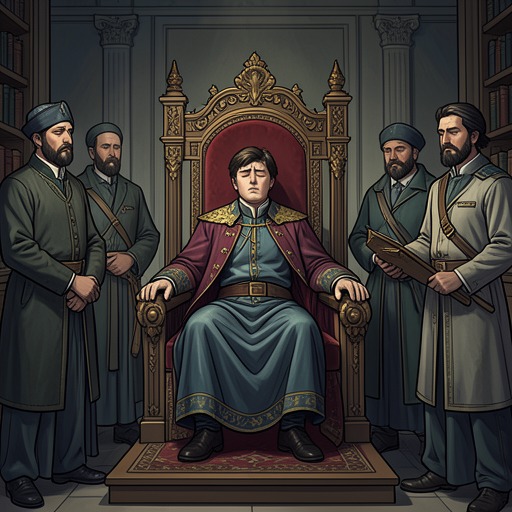
After the death of Tyland Lannister, Aegon III attempted to make appointments of his own. Still a boy and not yet thirteen, he asked for Rowan to become Hand, reasoning that Tyland had thought well enough of Rowan to offer him Baela’s hand. The king also wanted Baela returned to court and intended Alyn to become admiral. But the remaining regents, led by Unwin Peake, set aside the king’s decisions. They argued that Aegon was too young to determine such matters. Rowan was offered a place on the council and the offices of justiciar and master of laws, but not the Handship; Peake combined that office with Protector of the Realm and took both for himself.
Rowan’s elevation eventually came after a further clash between Peake and the council. When Aegon chose Daenaera Velaryon as his bride, Peake argued that the child was too young to secure the succession and sought to have the decision overturned. Rowan opposed his proposal, pointing out that it would effectively substitute Peake’s daughter as the intended bride. The council stood by the king’s choice. Later, after Peake’s unsuccessful attempt to use the threat of resignation to bend the other regents to his will, they accepted his resignation and appointed Rowan Hand in his place. His accession followed not a military victory but the accumulated loss of Peake’s influence at court.
Governing During the Lysene Spring
As Hand, Rowan helped address the unsettled Vale succession. The Arryn claimants refused to come to King’s Landing and submit their dispute to the regents’ judgment. Rowan responded by sending a thousand men to Gulltown under Ser Corwyn Corbray, himself a fellow regent, to restore the King’s Peace and settle the question of succession. The action shows the practical authority attached to his office: the council’s judgment was to be enforced, not left as a request the claimants could ignore.
Rowan’s career therefore spans several kinds of service. He fought in the Reach for Rhaenyra, was considered as a stabilizing royal consort, accepted lesser offices when Aegon’s appointments were blocked, and finally became Hand when the regency turned against Peake. The record portrays him as an experienced and trusted figure whose personal ambition is not emphasized. At the same time, his story reveals how marriage, succession, military force, and council authority were bound together in the years after the Dance: a proposed marriage could shape the line of inheritance, a young king’s choices could be overruled, and the Hand’s authority could ultimately be asserted through troops as well as deliberation.